“I hadnt realized how much Id longed to hear those words from my mother all my life.”
Your granddaughter needs to go to a hospital in Nashville for her depression, I told my 95-year-old mother.
Shell be away a few months.
My mother sat in her easy chair in stony silence.
You mean she wont be home for Christmas?
But the doctors think this is best.
Youre making a mistake, she told me.
I couldnt bring myself to explain.
Mom never asked for details, and I was relieved not to talk with her about it again.
I desperately wanted to turn to my mother for support but didnt trust that I would get it.
Mom was raised to believe a womans role was to be the glue for her family.
Keep your figure to keep your husband, shed tell me.
And always stay in control of your children.
To skirt around her criticism, my visits with Mom became shorter and more task-oriented.
Women have long been pressured to create good families by being perfect mothers.
Theyre often shamed for doing too much or too little for their kids.
Still, all my efforts to excel as a mother didnt prevent my daughter from becoming deeply depressed.
I needed help but was ashamed to admit it.
There would probably be more, they told me.
I prepared myself for the fact that my vibrant, complicated mother might soon die.
To my surprise, her deteriorating health made her softer and me more forgiving.
I began checking in on her several times a week.
My daughter was making progress with recovery, and I was hopeful shed soon be coming home.
Then I got a call from the rehab facility in Nashville.
This is the nurse.
Everythings fine, she said.
The staff are trained to begin conversations this way.
But if everything is fine, I wondered, why would a nurse be calling?
Your daughters had an accident.
The nurse handed the phone to my daughter.
Im fine but really tired, so dont come now.
But I may need a skin graft.
After we talked for a while, I hung up the phone and went to visit my mother.
Mom was weak and often tired, taking more naps than usual.
And she had been having more mini strokes.
I have some bad news, I said to my mother the next time I saw her.
Your granddaughter burned her leg in an accident and now needs an operation.
She will be in the hospital in Nashville for several days.
Ill be driving there tomorrow, but I dont want to leave you now.
Of course, you must be with her, she said.
Promise you wont go anywhere until I get back?
We both understood her time on Earth was limited.
She smiled and nodded.
Now listen, she said, and looked me square in the face.
I was waiting to hear her disapproval or advice or concern about my daughter.
Instead, she said six words that changed my life: Youre going to get through this.
She had always given me love, but not unconditional trust.
Despite the uncertainty that surrounded me, I suddenly felt confident and calm, rather than anxious or inept.
I hadnt realized how much Id longed to hear those words from my mother all my life.
At the Vanderbilt burn unit, I stayed with my daughter for five days.
In a way, it was a precious time for us.
I also openly shared myself with her in a way Id never done before.
At one point, I even let my daughter hug me while I cried.
You must have dropped this, I said, and handed her the pills.
She swallowed the pills and smiled.
The nurse looked confused but finally left the room.
What was that about?
I thought if I saved up three doses then I could get high.
Im sorry, Mom.
My daughter sighed and looked out the window.
We sat together on her bed in silence.
I couldnt believe the excruciating leg pain she was willing to endure just to get high.
It would be a long, tough journey for her.
I tried to imagine what I would want to hear.
I stopped trying to be a perfect mother.
I stopped trying to control things.
I didnt give her any advice at all.
Instead, I held her hand and said six words: Youre going to get through this.
While I was in Nashville, my mother suffered a major stroke.
Once home, I immediately went to the retirement home to see her.
She was lying in bed, paralyzed on one side and only able to utter a word or two.
I held her hand and said, I love you.
She nodded her head.
Four days later, she died.
Sometimes, I relapse into old patterns of fear.
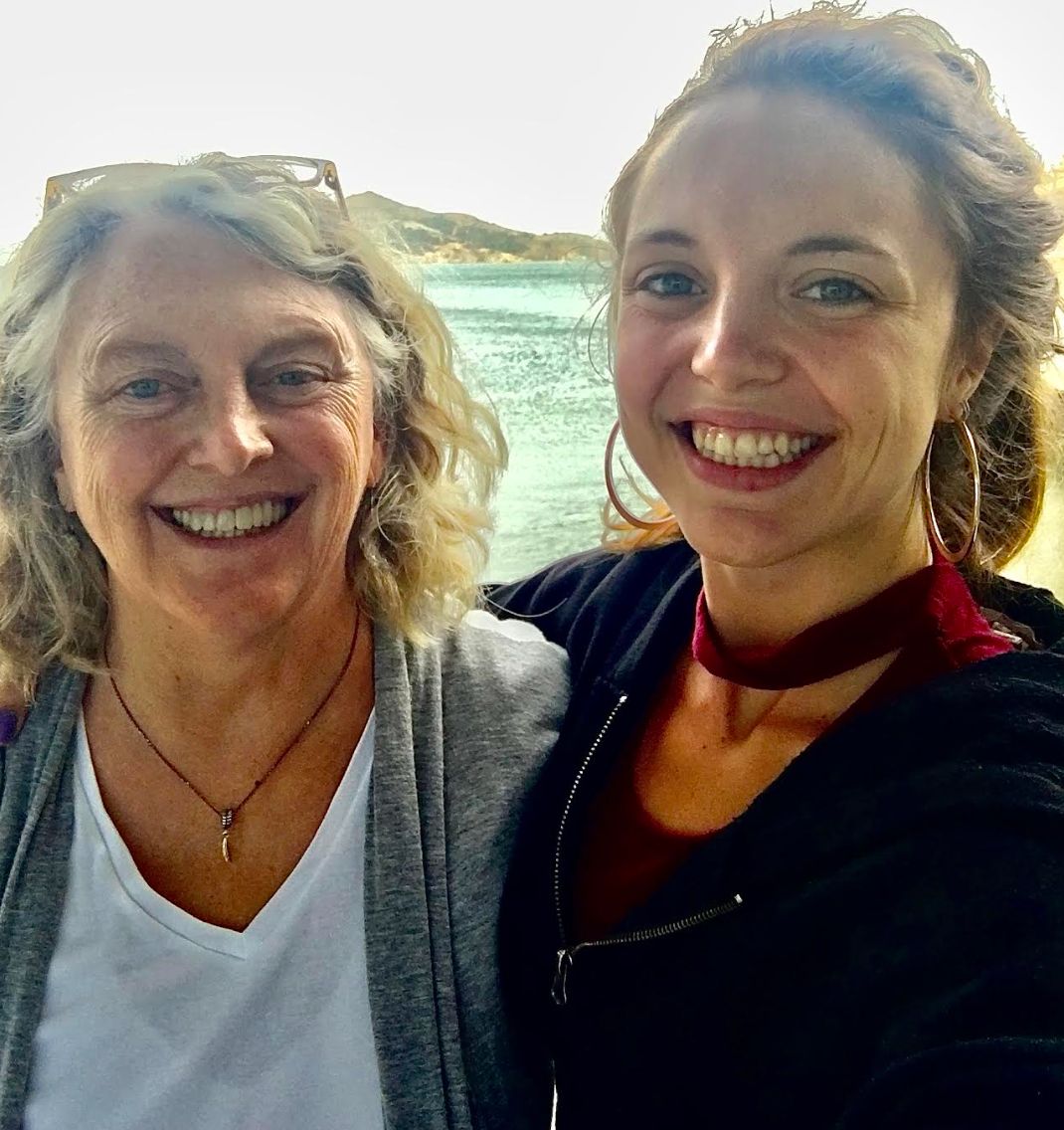
Ann lives with her husband in Asheville, North Carolina.
Her writing has been featured in several publications and podcasts.
For more, visitwww.annbatchelder.com.
This article originally appeared onHuffPost.
